San Francisco in October of 1911

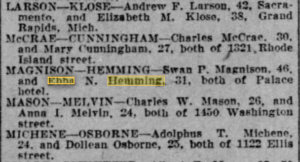
On Oct. 10, 1911 The San Francisco Call published names of people who had recently applied for marriage licenses in San Francisco. Among them, MAGNISON – HEMMING. That’s Swan Magnuson and and his niece Ebba Nathalia Hemming(sson). They’re in California from Alaska and staying at the Palace Hotel for the occasion.

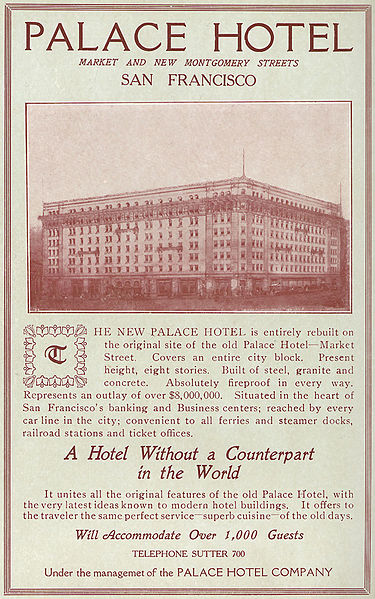
The Palace Hotel had been severely damaged during the 1906 earthquake, but according to the ad from 1911 it was now ‘entirely rebuilt’.

In Fairbanks, Alaska

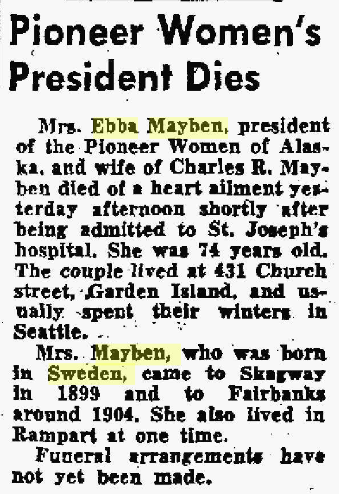
From the Fairbanks Daily News – Miner, Fairbanks, Alaska Thursday Nov. 3. 1955.

From an Oral History of Pioneer Women of Alaska:

Vonda V. Kelning was born in Sweden and arrived in Skagway in 1899. She arrived in America with her brother, Swan P. Magnuson in 1897. In 1902 she moved to Rampart until leaving for Fairbanks in 1907. In 1909 she married A.P. Kelning and was widowed in 1913.

Vonda V. Kelning was born Wendla Victoria Magnusson in Döderhult, Kalmar län in 1858. She was one of five siblings. Her brother Sven Peter Magnusson had emigrated to the US in 1885. He came back to Sweden in 1897, and after their mother had died the same year Wendla joined her brother as he returned to the US. They brought with them their 17 year old niece Ebba. Her mother, their sister Maria Lovisa, had died in 1893.

In 1910 they are all living in Fairbanks. Ebba lives with her uncle, known as Swan.

In the 1920 US census Ebba and Swan are listed as husband and wife.

Swan dies in 1936, 72 years old. Ebba is 56. In 1939 she marries Charles Mayben. It’s his 3rd marriage. The documents show that it’s Ebba’s second marriage, but I have not been able to verify that she and Swan were ever legally married.

Wendla and Sven Peter/Swan were my 3rd cousins 3x removed. Ebba was my 4th cousin twice removed.

Sara Stina Danielsdotter b. 1835, year of death unknown

Before Sara Stina Danielsdotter married Carl Johan Larsson, had a family and emigrated to the US she had been married to his brother, Lars Magnus Joachim Larsson.

Sara Stina and Lars Magnus had two sons, Lars Johan and Franz Oscar. Both boys died in their first year of life. Lars Magnus died at 35. In 1866 Sara Stina was 31 years old and a widow. The following year she married her brother in law. A legal procedure was required to cancel the “brother-in-law-ship”.

Larsons from Jönköping

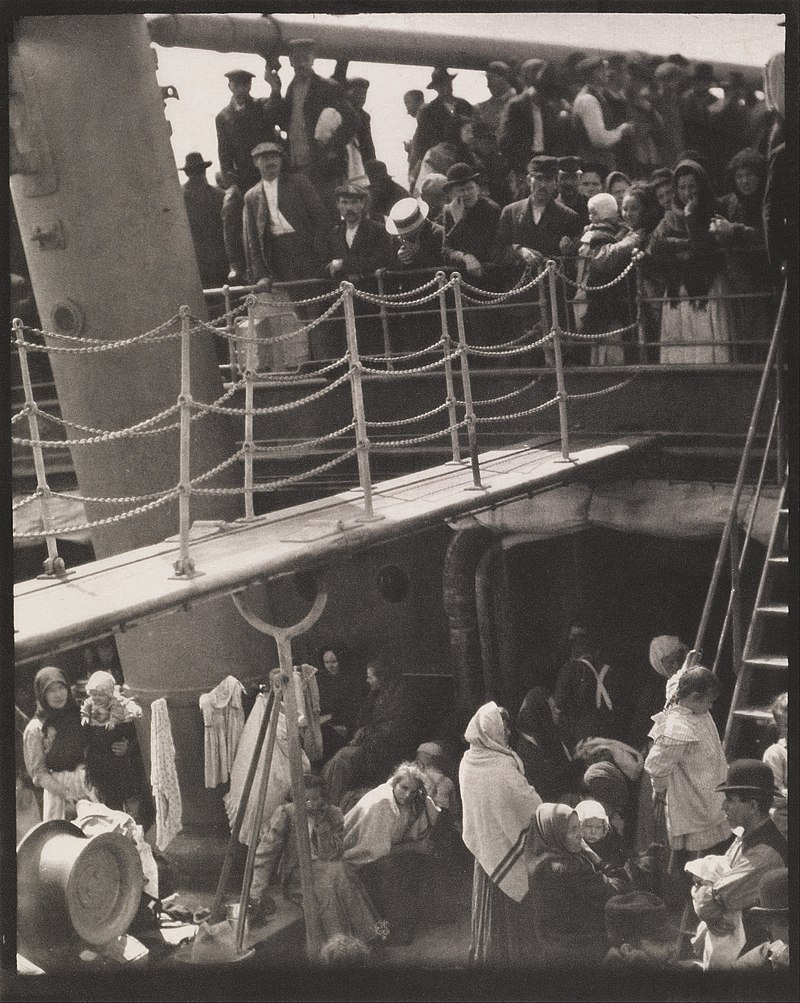
Photo by Alfred Stieglitz, 1907.

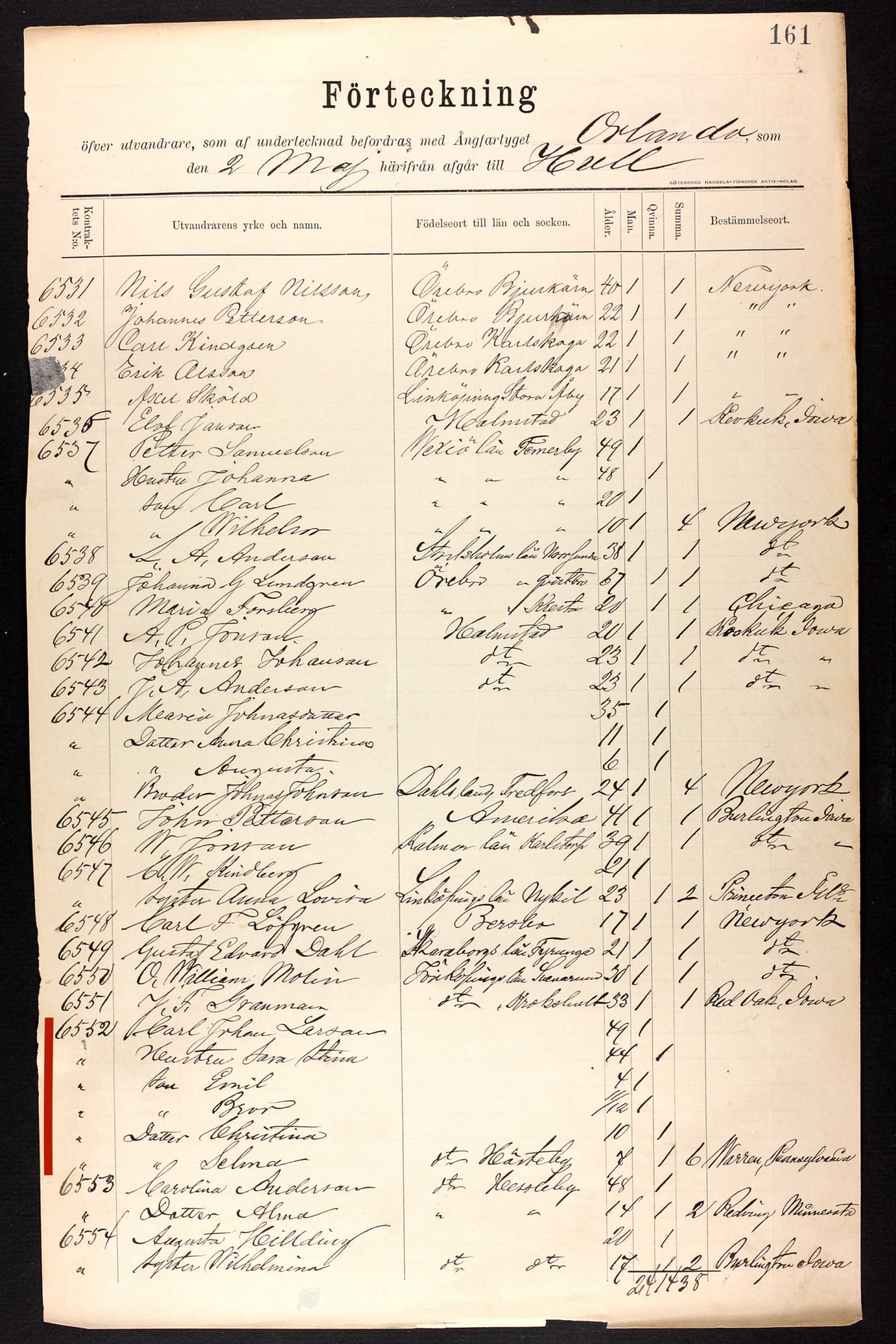
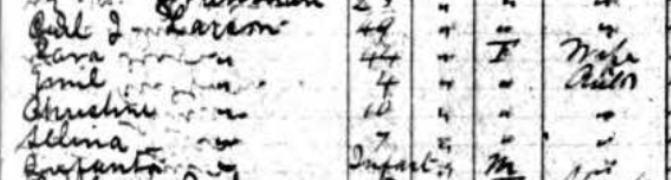
S/S Orlando left Göteborg on May 2, 1879 for Hull on the English east coast. On board were Carl Johan Larsson, wife Sara Stina, and children Emil, Bror, Christina, and Selma, from Hässleby parish in Jönköpings län. Their destination: Warren, Pennsylvania. Carl Johan was my 3rd great uncle on my mother’s maternal grandfather’s side. (My maternal grandmother’s grandfather’s brother.)

From Hull the passengers would take a train to Liverpool where they would board the ship for North America.

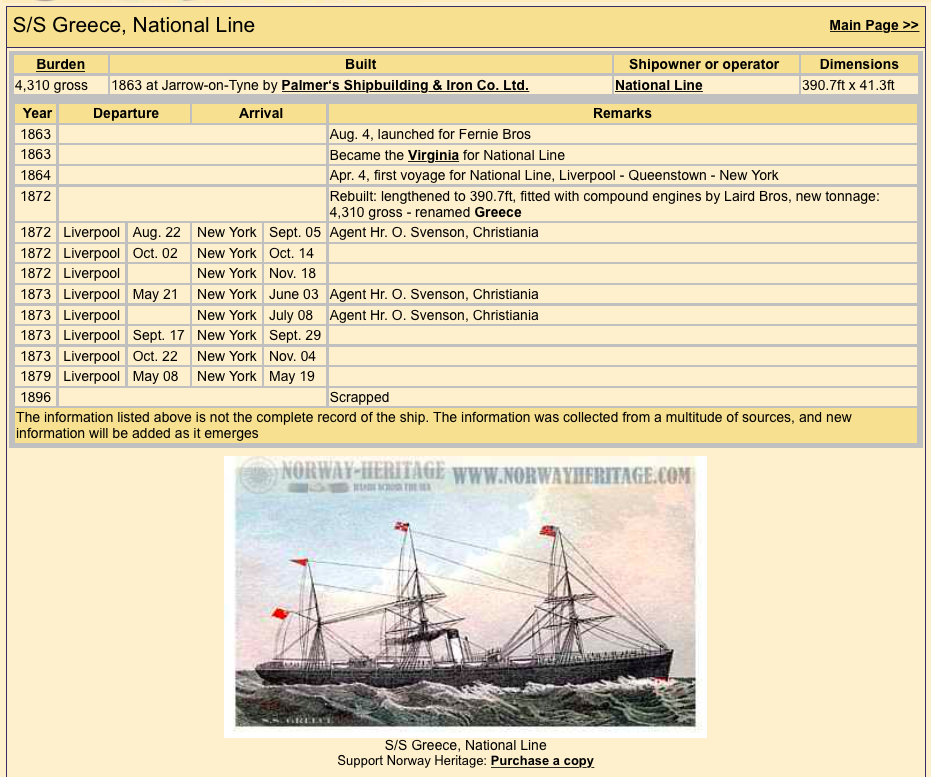
Carl, Sara, Emil, Christina, Selma, and “infant” arrived in New York on May 20 1879 on board the S/S Greece. According to the record above they left Liverpool on May 8. The family traveled in steerage.

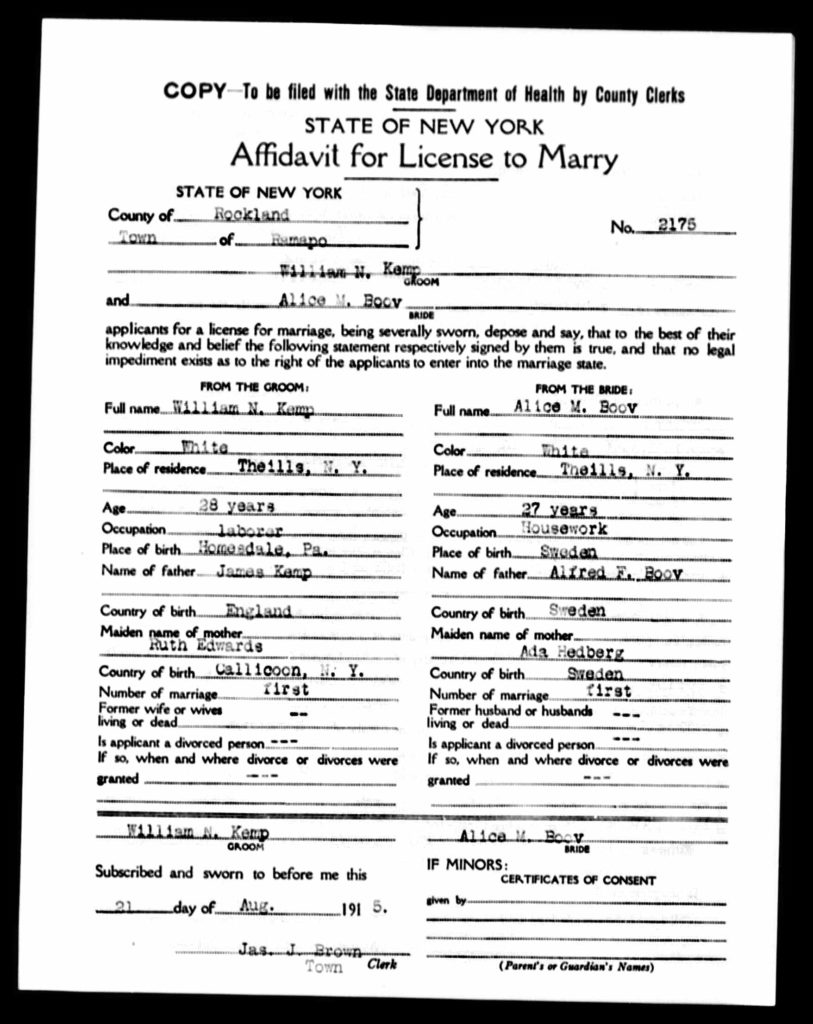
Alice Maria Bååv Kemp

Alice Maria Bååv Kemp was born in Göteborg in January 1888 and died in Chicago in July of 1970. She had lived in the United States since the spring of 1913, for 57 years.

Alice’s name appears alongside her husband’s on documents between their 1915 wedding and her husband’s death in 1939. After 1939 her son, Walden, born in 1916, is listed as the head of household. Alice is listed as a widow.

I don’t know if Alice ever worked outside the home after she married. The notes for her on the censuses say ‘housework’, or ‘at home’. Before she married she worked at an institution the for developmentally disabled in upstate New York. I have wondered what her time there was like.

Alice was my grandfather Kratz’s first cousin, and she’s one of my closest immigrant relatives. Her life is a mystery. There is very little information.

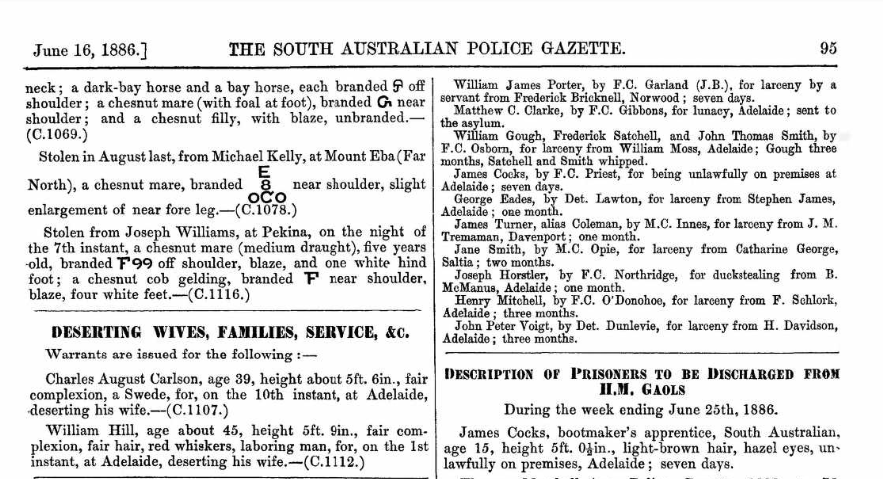
From the South Australian Police Gazette

Published on June 16, 1886: Charles August Carlson, age 39, height about 5ft. 6 in., fair complexion, a Swede, for, on the 10th instant, at Adelaide, deserting his wife.

In other words, this man, of Swedish origin, deserted his wife on June 10, 1886, in Adelaide, South Australia.

The man could possibly be my 2nd cousin 3 times removed Carl August Carlsson, born on Aug. 13, 1849 on the island of Öland. He was a seaman, and from the mid 1870s onwards his whereabouts are unknown.

(Technically this story is outside the scope of the blog, but Carl August from Öland is missing and I think we should worry. And, for all we know he might have ended up an immigrant to the US. Several of his relatives were seamen too and several of them drowned in faraway places. I hope Carl August didn’t drown, and I hope he didn’t desert his wife.)

Who gets to decide what is Really Swedish?

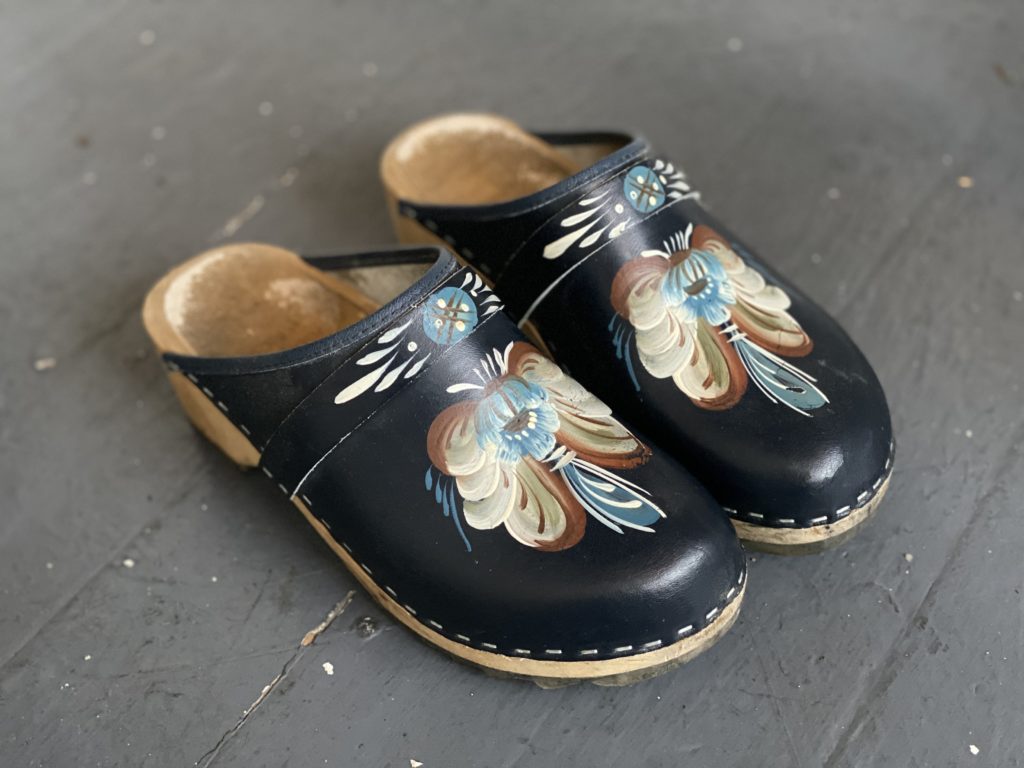
Through interacting with Swedish-Americans, mostly online, I’ve learned that what is perceived as Swedish in the United States differ widely from what is perceived as Swedish by present-day Swedes. Descendants of Swedish immigrants to the US keep alive traditions that may have died out in Sweden long ago. Swedish immigrants also intermarried with other Scandinavians, and their descendants mix and match between the traditions sometimes unknowingly. One example: All Americans talk about lutefisk, not knowing that is the Norwegian word. (Swedish: lutfisk.) Lefse (a flatbread) is also assumed to be solidly Swedish even tho it’s mainly Norwegian.

Many Swedish American foods and practices remind me of my grandparents, all born at the end of the 1800s and the very early 1900s. Old fashioned cooking principles involved boiling the life out of both meat and vegetables and/or covering them in heavy flour bases sauces. My mother’s generation rebelled against much of this, and for good reason.

Customs or dishes common in Sweden today usually don’t make their way across the Atlantic. If they do, it’s in popularized or bastardized versions. Hygge (a Danish word referring to creating moments and spaces of laidback cosiness) and fika (the Swedish tradition of having coffee and conversation) are two examples.

All this means that the Swedishness of Swedish American culture feels old-fashioned and limited to a Swede of today. There are many possibilities for misunderstandings, contradictory interpretations, and arguments. Both sides feel strongly that their version is the correct one. I surprise myself by being quite invested in the discussions. My own Swedishness comes out more judgmental and argumentative than I’m really willing to admit.

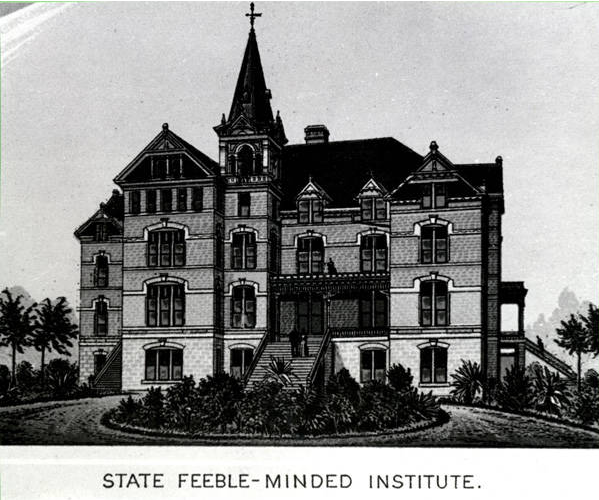
Nebraska Institution for Feeble-minded Youth

Bruce Jens Christensen, my 6th cousin, was born in 1941 and died at the Nebraska Institution for Feeble-minded Youth in Beatrice, Nebraska in 1966. I don’t know how or why he ended up there.

When I first noted his birth and death years I assumed he might have died in Vietnam. I was wrong. Instead I found yet another institution taken straight out of a nightmare.

Quoting from the mission statement of the Nebraska Institution for Feeble-minded Youth, their goals were to provide

“custodial care and human treatment for those who are feeble-minded, to segregate them from society, to study to improve their condition, to classify them, and to furnish such training in industrial mechanics, agriculture, and academic subjects as fitted to acquire”.

The Asylum Project also notes that,

By 1935, in order to assure complete separation from society, [Nebraska Institution for Feeble-minded Youth] resident’s graves were no longer marked with family names, but with numbers; families desired to disassociate themselves from their “defective” relatives by dehumanizing them.

A young couple I know had a daughter with Down syndrome earlier this year. In a Facebook post they say:

While the words certainly carried a heaviness with them at the time, due mostly to misconceptions on my part, within a few hours of receiving the news we were already talking about what a beautiful life she would have.

Parents aren’t expected, or forced, to find their children ‘defective’ anymore. Parents aren’t pushed to hide away their children at institutions. Parents are allowed to be happy, optimistic, and loving.

When I think if it I am sure that more than a couple of the students I’ve had at American universities would have been considered feeble-minded just a few decades ago. I didn’t know their exact diagnoses, and I didn’t need to know, or want to know. But what I saw was hard working kids with a-typical communication styles, who were supported by parents, teachers, and others.
A perfect day

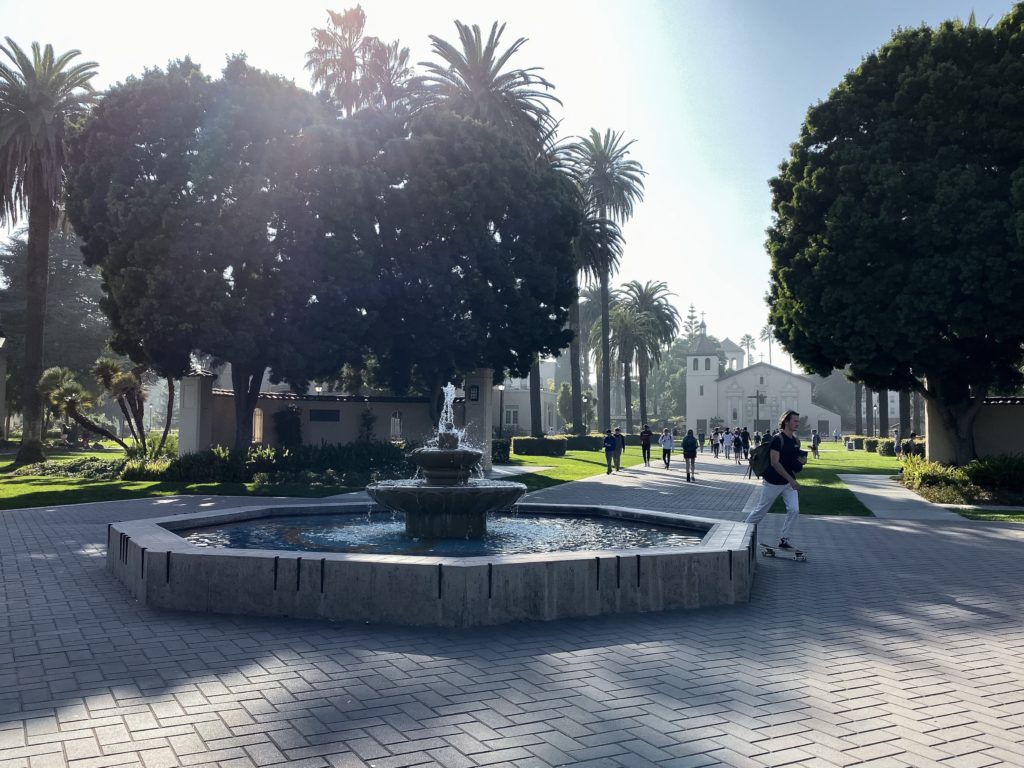
Santa Clara University Nov. 8, 2019.

The first year I lived in the California I thought to myself that every single day could have been a summer’s day in Sweden. Summer’s days in Sweden can be hot and sunny, or cold and rainy. But the trees and lawns will be green, and everything is generally pretty.

A California November day, like today: Sunny, 72F or 22C. Perfect Swedish summer. Guy on skateboard included.